


What Are The Different Types Of Curls And How To Identify Yours?
When most people think of curly hair, they imagine one universal type of curl. Terms like ‘curl patterns,’ ‘coils,’
or ‘tight curls’ often sound confusing. But there are different types of curls, each unique in texture, shape, and
structure. Knowing your curl type helps you choose the right curly hair products and design a routine that keeps
your curls healthy, defined, and beautiful.
Understanding curl types also prevents trial-and-error with products that may not suit your hair. From loose waves
to tight coils, let’s explore the types of curly hair and how to identify your curl type.
The Curl Classification System
Hair is broadly divided into four categories:
- Type 1: Straight
- Type 2: Wavy
- Type 3: Curly
- Type 4: Coily
Within these, subcategories A, B, and C describe the width of the curl pattern:
- A: Wider, looser pattern
- B: Medium-sized pattern
- C: Tightest, smallest pattern
Different Types Of Curls
Type 2: Wavy Hair
Wavy hair forms an “S” shape and sits between straight and curly. It’s prone to frizz and can easily be weighed down
by heavy products. These loose curls don't allow natural oils to travel down the shaft. People with this type of
curly hair should use a moderate amount of extra moisture and nutrition.
- 2A: Loose, fine waves with minimal volume. Best kept light with a gentle curl shampoo and minimal styling products.
- 2B: More defined “S” waves starting from mid-length. This type of curly hair often struggles with frizz - use a lightweight mask for curly hair weekly.
- 2C: Thick, coarse waves with stronger definition and frizz. These curls need extra hydration, and the Curl Manifesto leave-in cream for curly hair helps lock in smoothness, giving +72% more curl definition* without weighing hair down. This lightweight leave-in cream shields hair from humidity and preserves the curl pattern while reducing breakage by +86%*
*INSTRUMENTAL TEST, AFTER APPLICATION OF SHAMPOO + MASK + CREME VS. NON-CONDITIONING SHAMPOO.
Type 3: Curly Hair
Curly hair has distinct spirals or ringlets that can range from loose to tight corkscrews. This type is naturally
drier and needs moisture. In this type of curly hair, the fibre is more permeable and delicate. Hence, you need
significantly hydrating and strengthening products because the tighter the curl shape, the harder it is for natural
moisture to reach the ends.
- 3A: Loose, shiny curls about the size of sidewalk chalk. Requires lightweight curly hair products to avoid weighing down the curls.
- 3B: Tighter curls with more volume and frizz. Hydration is key - try a nourishing mask for curly hair and a leave-in cream for curly hair.
- 3C: Corkscrew curls that are dense and springy. These curls shrink visibly and need intensive care with the best shampoo for curly hair, plus rich styling creams.
Type 4: Coily Hair
Coily hair has tight curls or zig-zag patterns and is the most fragile type of curly hair due to dryness and
shrinkage. The curls are fairly tight near the scalp and start to loosen up slightly as they get longer. Natural
oils have a hard time penetrating the shaft of coily hair. It requires a lot of products and intensive overnight
treatments to get the most nourishment, strength, and definition.
- 4A: : Dense, springy coils about the size of a crochet needle. Needs consistent moisture and oils.
- 4B: Zig-zag curls with sharp angles and less definition. Use a hydrating curl shampoo and apply oils to lock in moisture.
- 4C: Very tight, densely packed coils with maximum shrinkage. This type of curly hair is prone to breakage and benefits from overnight treatments with nourishing oils and a mask for curly hair.
How To Identify Your Curl Type?
- Wash and Air Dry: Cleanse with a gentle curl shampoo and let hair air dry without styling products.
- Observe The Pattern: Notice if your hair falls into waves, spirals, or coils.
- Check Thickness & Diameter: Compare curl size to objects (chalk for 3A, crochet needle for 4A, etc.).
- Note Shrinkage: The tighter the curl, the more shrinkage after drying.
Now that you know what the different types of curls are, and how to identify your curl type, browse through a wide range of Kérastase Curl Manifesto products and start maintaining the health and overall appearance of your curly hair with ease. Don’t forget to consider your curls' porosity, sensitivity, and fibre thickness while selecting the best routine and products. Not sure which product suits you best for your curly head? Head to our Hair Quiz tool to find the perfect hair care routine based on your specific needs, from the comfort of your home.
Frequently Asked Questions
Products You May Like
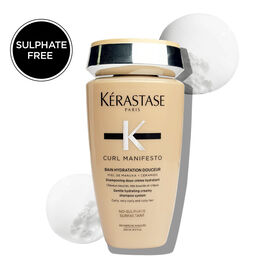
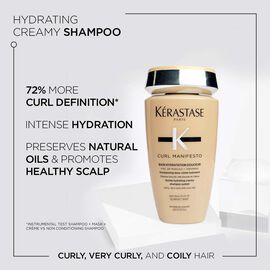
Curl Manifesto Bain Hydratation Douceur Shampoo (Sulphate-Free)
Gentle, hydrating creamy shampoo for curly, very curly and coily hair.
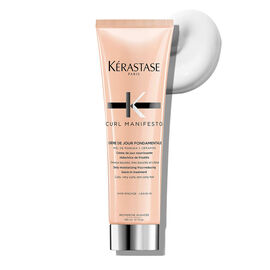
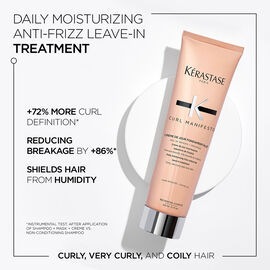
Curl Manifesto Crème De Jour Fondamentale Leave-in Cream
Daily moisturising, frizz-reducing leave-in cream treatment for wavy, curly hair.
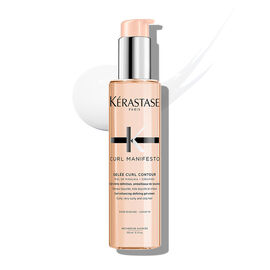
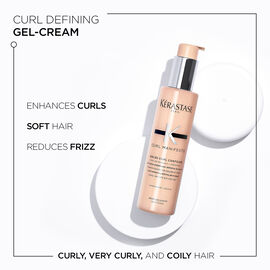
Curl Manifesto Gelée Curl Contour Gel-Cream
Curl enhancing, styling gel for curly hair.
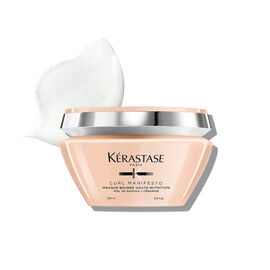
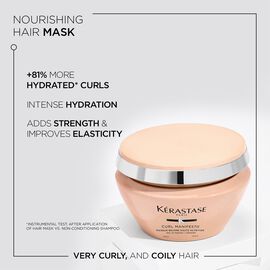
Curl Manifesto Masque Beurre Haute Nutrition Mask
Extra-rich nourishing curly hair mask for wavy, curly hair.


